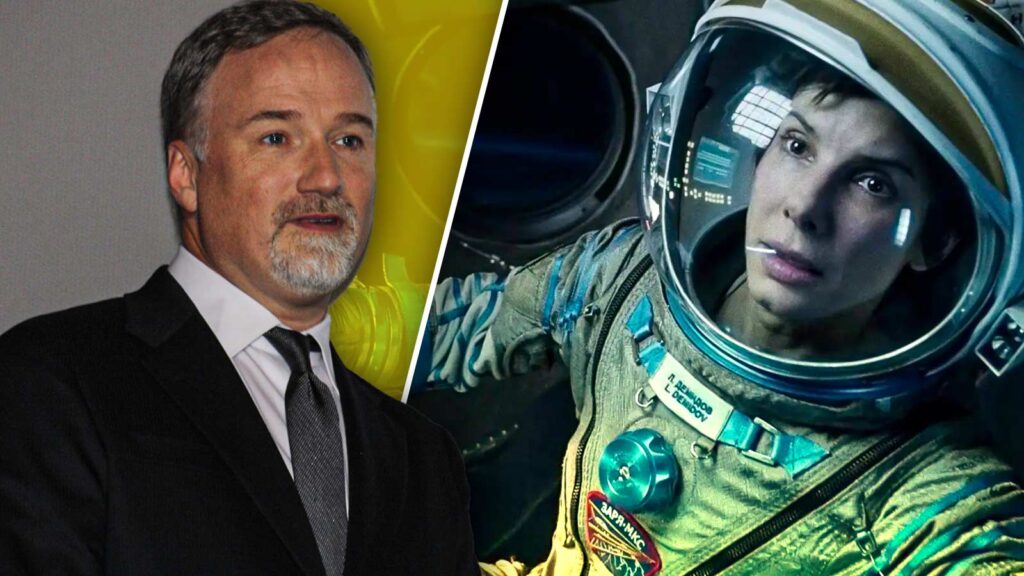
There are some movies that set a benchmark for filmmaking in their respective genres, and Gravity is one among them. The science fiction masterpiece exposed complex technologies that pushed the limits of what is possible in cinema.
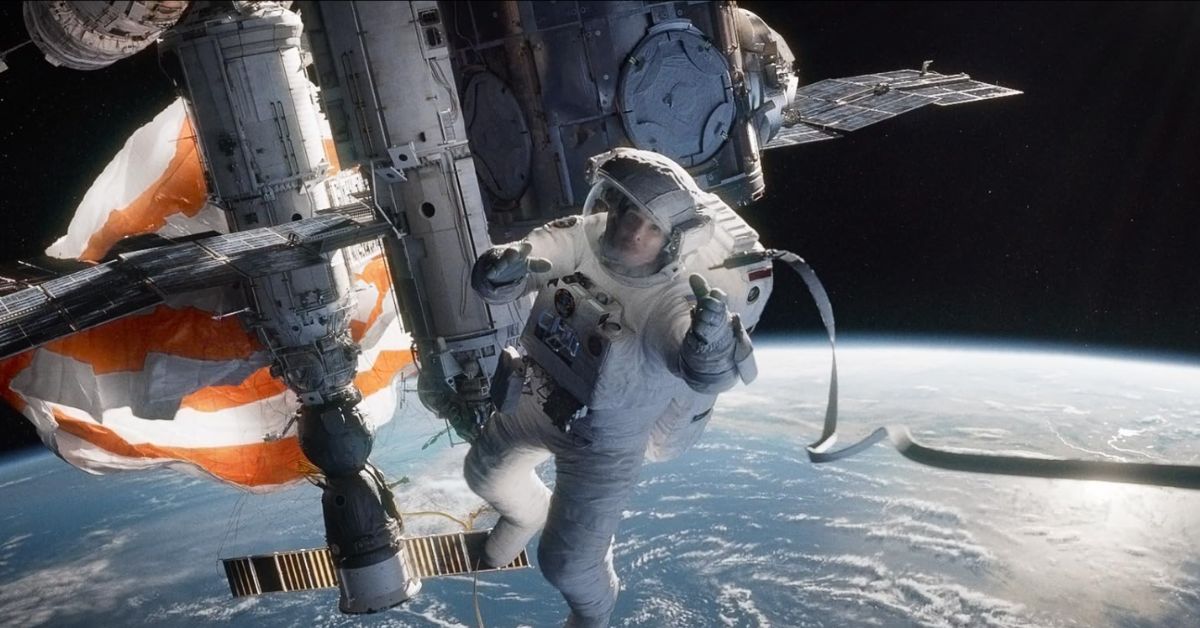
Alfonso Cuaron, the director of Gravity, is no new face to innovation. Yet at times, imagination can just get too big for the directors to put into reality, and the space thriller presented similar problems to Cuaron, who had to make some crucial calls that would decide the fate of the movie.
How David Fincher’s Advice Worked in Gravity‘s Favor
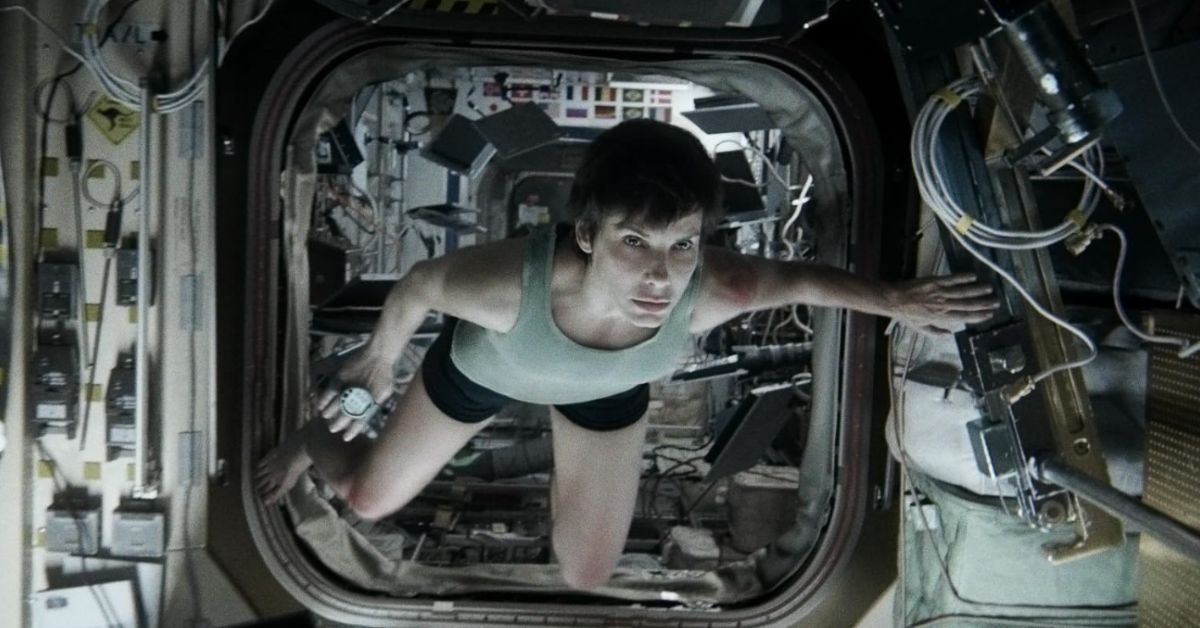
Alfonso Cuaron experienced a setback after Children of Men underperformed at the box office. Cuaron was struggling with finances and needed a project that the studios would go for. With his son Jonas, he wrote Gravity, hoping it would bring him back to Hollywood’s good graces.
However, Warner Bros. was not very comfortable at the beginning of the project. They were reluctant to put much money into what they saw as a risky plot. Cuaron also realized soon that the technology that would bring his vision to life did not exist at that time.
Seeking advice, Cuaron turned to James Cameron and David Fincher. Speaking to Deadline, Cuaron said that Cameron provided a way forward, although it would have cost him a $400 million movie. On the other hand, Fincher had different advice.
Fincher told us to forget about it, there’s no tech, wait 6 years. And he wasn’t wrong. James Cameron told us how we could do it but that was a $400 million film. We told him only you can do that. And he said yeah you’re right. So we developed our own way.
Cuaron decided to stick with Fincher’s recommendations. He also stated that it took him and his team three to four years to come up with the right technology on their own. This was a very decisive move in making the movie.
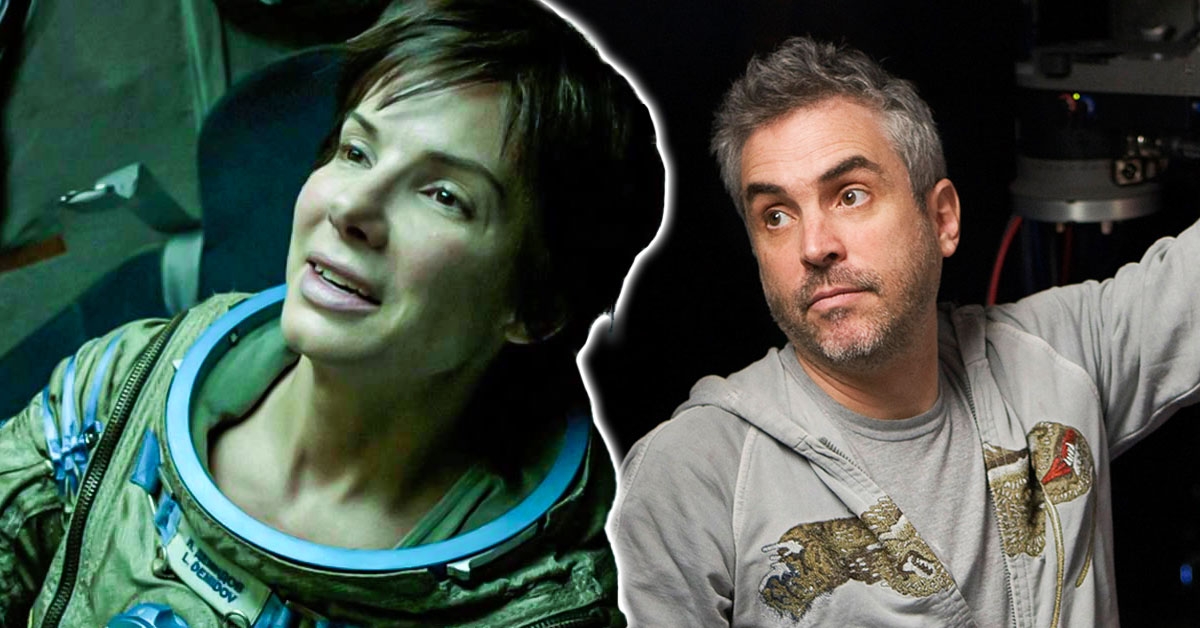
The gamble paid off. To the surprise of the studio, Gravity got a great response at the Venice Film Festival. Moreover, the movie grossed over $732 million worldwide (via Box Office Mojo) and won 7 Oscars, including one for Best Director.
Gravity‘s Technology and Making
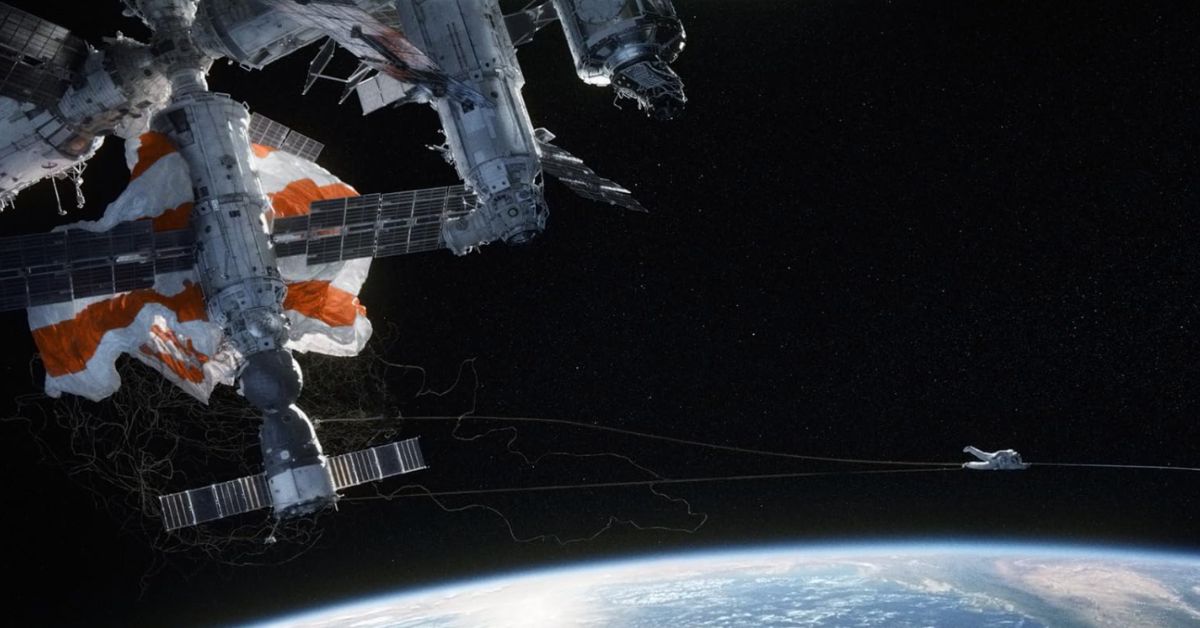
Some of the amazing facts about the making of Gravity were revealed during the 2014 AMPAS event (via IndieWire). One of the most fascinating facts is that Sandra Bullock’s famous spinning scene was filmed without the actress moving at all.
Tim Webber, the visual effects supervisor, explained that the team would spin the camera around her, which emulated the feeling as if she were spinning. The crew would “partially move her and partially move the camera.” Such an approach was necessary as the lighting setup did not allow much space for mobility for the actors.
The filmmakers essentially made Gravity three times over. They created pre-visualizations, shot the film, and then edited it, and each step influenced the others because of several 3D modeling, CGI, and VFX involved.
One of the most creative decisions was to use car assembly robots for moving lighting equipment and cameras. A light box containing more than 2 million LED lights was also used to replicate the lighting conditions of outer space.
Another interesting fact is regarding the movie’s editing. Despite Gravity‘s long uncut sequences, it was stated that the movie contains hundreds of hidden cut shots, and Mark Sanger, the editor of the movie, said, “70 percent of the movie is made up of 17 shots,” which shows the complexity of the movie despite its simple visual style.

It seems like Cuaron’s decision to trust David Fincher’s advice over James Cameron’s landed right for the movie. Cameron’s suggestion might have also worked, but the film could have been very different and probably wouldn’t have done as well at the box office because of its high production cost.
Gravity is available to stream on Prime Video.
Frequently asked questions
What advice did David Fincher give Alfonso Cuaron about making Gravity?
As recalled by Cuaron (reported by Deadline from a 2024 Locarno masterclass), Fincher advised him to “forget about it, there’s no tech, wait 6 years.” Rather than abandon the project, Cuaron and his team spent roughly three to four years developing their own technology to realize the film’s vision. Cuaron later acknowledged Fincher “wasn’t wrong” about the technological limits of the time.
Why did Cuaron not follow James Cameron’s approach to Gravity?
Cuaron recalled that James Cameron showed him how the film could be made, but that approach would have been a roughly $400 million film. As Cuaron told it, he replied that “only you can do that,” and Cameron agreed: “yeah you’re right.” Cuaron instead developed his own filmmaking method, keeping costs far lower than Cameron’s proposed route.
How successful was Gravity at the box office and the Oscars?
Gravity grossed roughly $723 million worldwide and won seven Oscars, including Best Director for Alfonso Cuaron (the others were Cinematography, Visual Effects, Film Editing, Original Score, Sound Editing and Sound Mixing). The film had its world premiere at the Venice Film Festival, where it drew a strong response, and was distributed by Warner Bros. It is reported to be available to stream on Prime Video.