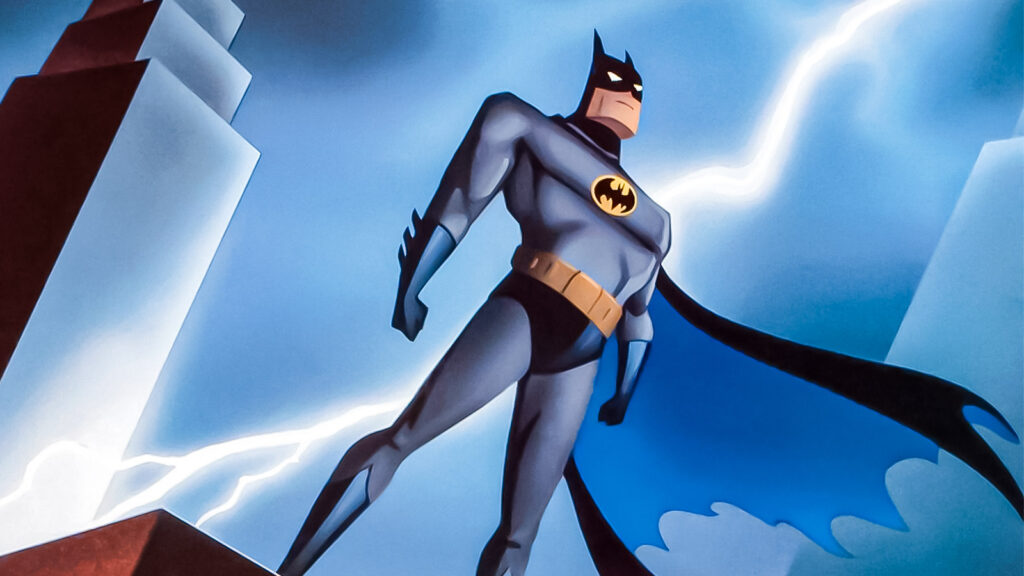
Batman: The Animated Series was an animated show for kids on paper, but the themes it explored made it appealing to both children and adults. After Tim Burton’s Batman, it was the next work in the franchise to take the character and his roster of rogues seriously. While they retained their theatrics, their tragedy was always humanized and explored.
Several moments in the show made us realize that it was way beyond just a kids’ show. Beneath the Art Deco skylines and stylish action sequences, the show regularly explored grief, addiction, mortality, and moral ambiguity with a maturity rarely seen in children’s animation of its era.
These ten moments prove that Batman: The Animated Series was never really made for kids at all.
1. Renee Montoya Watches Corruption Unfold in the GCPD
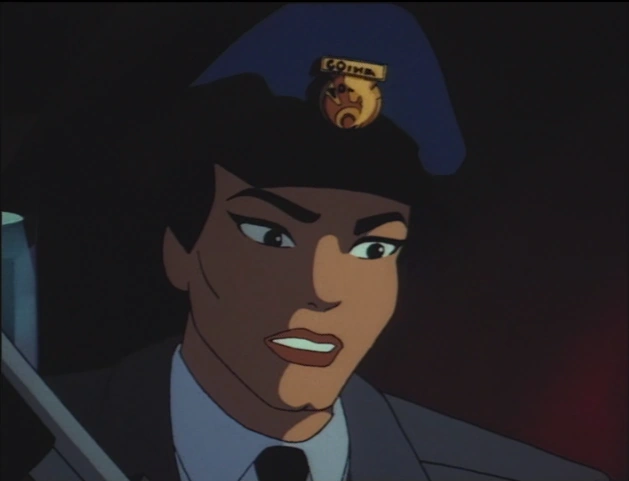
In the episode, ‘P.O.V.’, we see in real time how corruption works in Gotham, especially in the police department. This Batman: The Animated Series episode uses the Rashomon-effect to explore multiple perspectives on a single incident.
Officer Wilkes drinks on duty and lies to cover his failures, while veteran cops shrug off brutality as business as usual. Renee Montoya emerges as the one officer trying to hold onto integrity in an institution that punishes honesty.
Instead of showing the Gotham City Police Department as allies of Batman, it shows them as a morally ambiguous, self-preserving entity that would not hesitate to throw the Caped Crusader under the bus. It is BTAS at its most cynical and is definitely not for kids.
2. Mr. Freeze’s Grief Manifests as Villainy
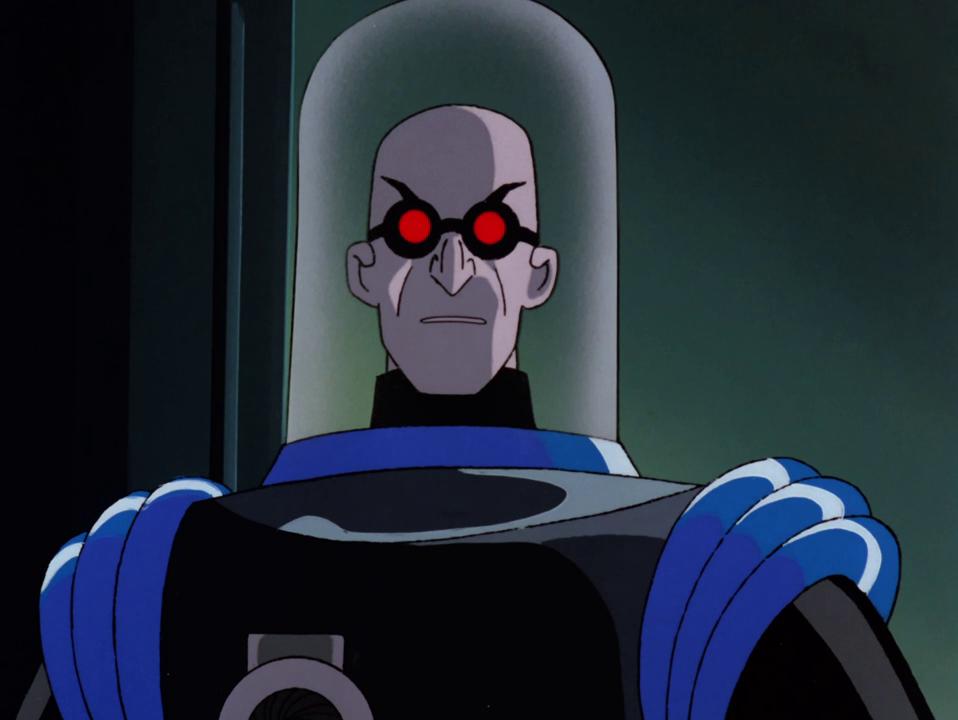
Mr. Freeze may have gotten the reputation of making just ice puns due to the unfortunate depiction in Batman & Robin, but Batman: TAS humanized him. ‘Heart of Ice’ reframed Victor Fries not as a gimmick villain but as a husband desperate to save his dying wife, Nora, who lies in cryogenic stasis after an accident caused by corporate greed.
The episode’s tragedy deepens across the series as later stories show Fries losing Nora again and again, each time reopening a wound that never fully heals. It is not just about a villain, but about widowhood, obsession, and letting go. These are topics that appealed to adults more than children, who would just want to watch action.
3. Harvey Dent’s Psychological Collapse Is Shown in Real Time
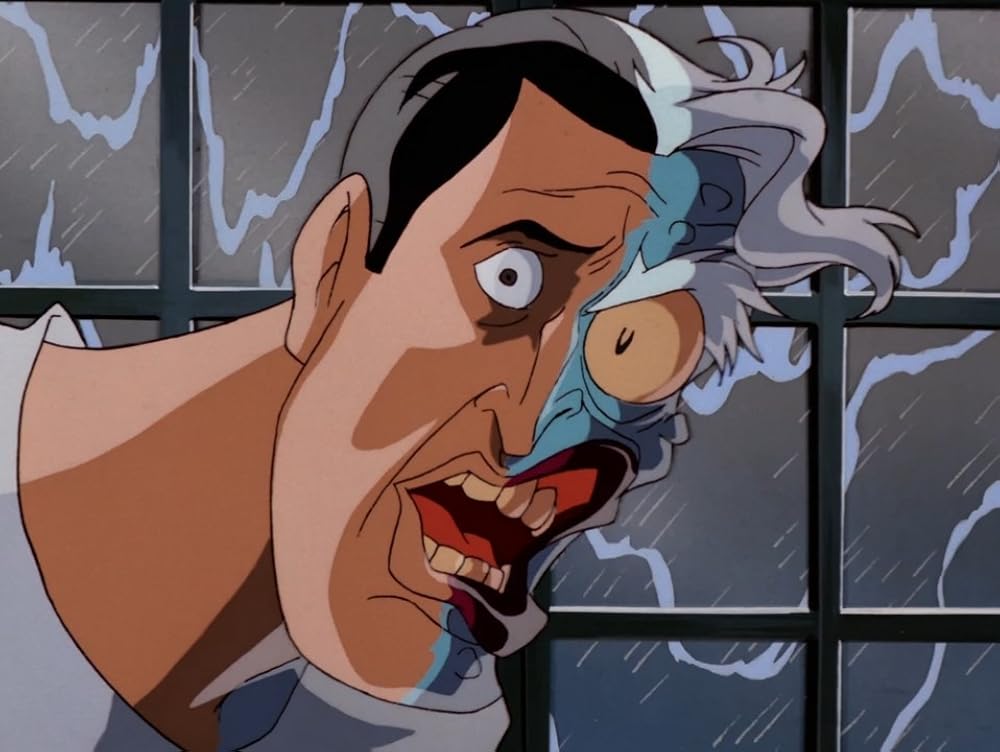
Harvey Dent’s descent into madness and villainy is one of the most compelling stories in the Batman lore. He was the White Knight of Gotham, but trauma made him into a monster that became the very thing he swore to destroy. Harvey Dent’s descent begins with anger management issues and manipulation by the mob, long before any acid ever touches his face.
The episode shows a scarred, dissociated Dent literally arguing with himself, his personality splitting into a caretaker and a monster he can’t control. It’s a portrait of dissociative rage and self-destruction that plays less like a comic book origin and more like a case study, forcing young viewers to watch a good man dismantled from the inside out.
4. Robin Steps Away from an Easy Revenge
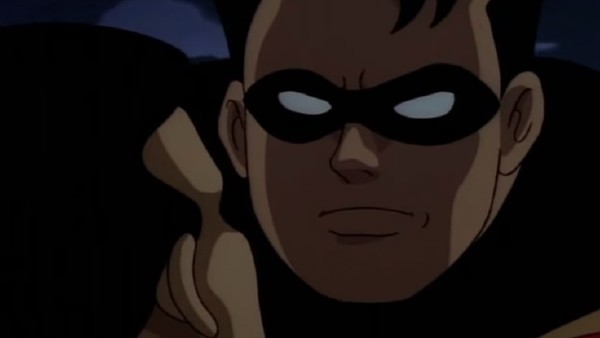
In the episode, ‘Robin’s Reckoning,’ Robin crosses paths with the killer of his parents, Tony Zucco. Batman refuses to let him use his persona as Robin to bring him justice. The episode looks at the different ways grief can affect people, comparing and contrasting Robin and Batman, who share similar pasts.
Despite all the efforts Robin takes to confront his parents’ killer, the ending sees him let go at the cusp of revenge. He heeds the advice of his mentor, who assures him that revenge would not heal the grief within him, having gone through something similar. It is a mature take on grief and trauma, and does not give a clear answer on how to navigate, which is not something a lot of children’s shows do.
5. Poison Ivy’s Seductive Con Against Bullock Was Never Meant for Children
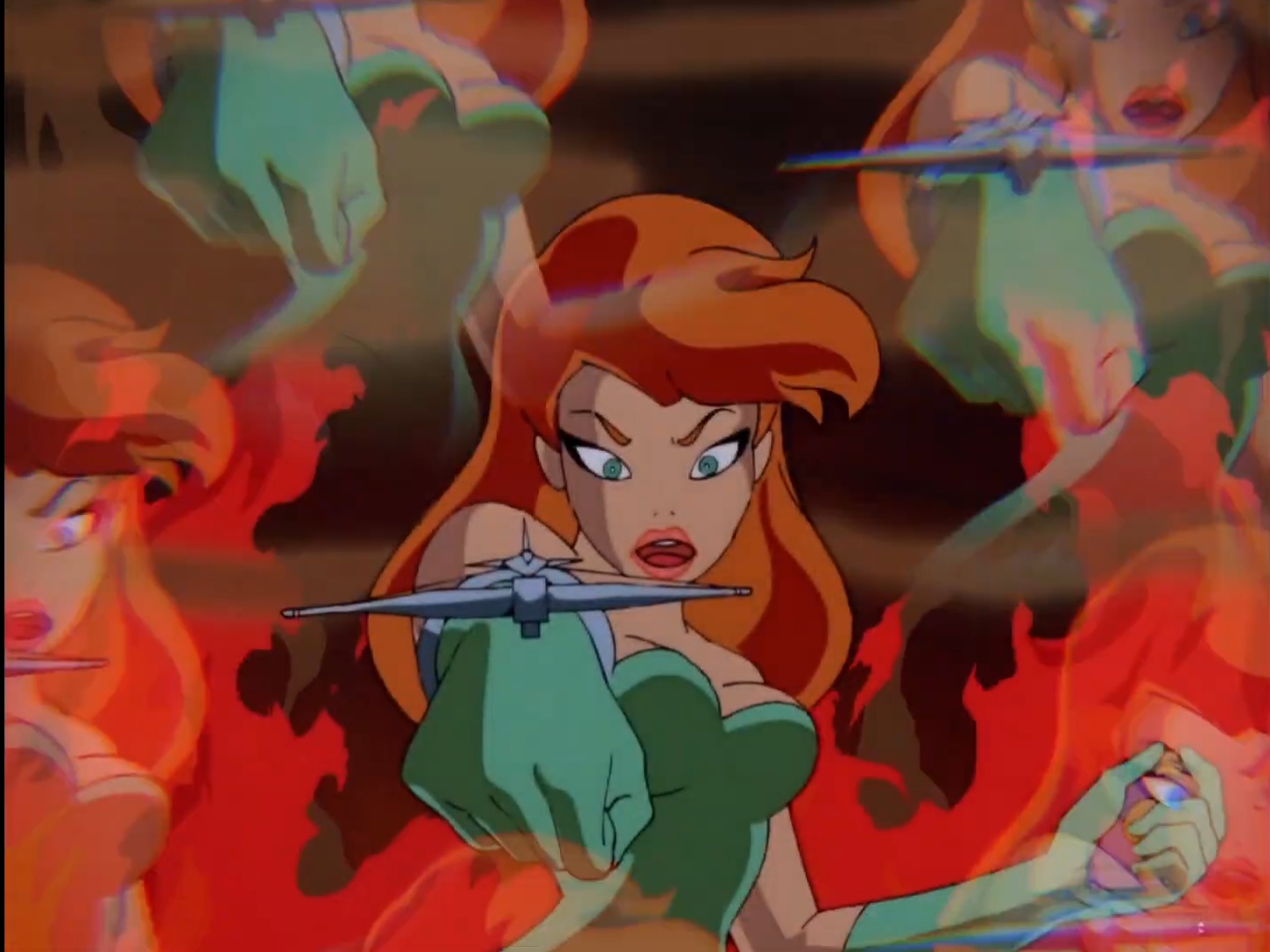
In ‘Pretty Poison,’ Poison Ivy poses as Dr. Pamela Isley, a health inspector romancing Harvey Bullock purely to manipulate him into shutting down a rival’s business and clearing the way for her toxin-laced cosmetics scheme. She kisses Bullock with a paralyzing toxin, leaving him helpless and humiliated, then continues the ruse even as Bruce Wayne grows suspicious of her intentions toward him as well.
The episode plays her romance with Bullock as a calculated con rather than genuine affection, exposing how easily trust can be exploited for profit. It’s a story about coercion and manipulation disguised as courtship, uncomfortable territory for a cartoon aimed at children.
6. Temple Fugate’s Wasted Obsession Sits in Discomfort
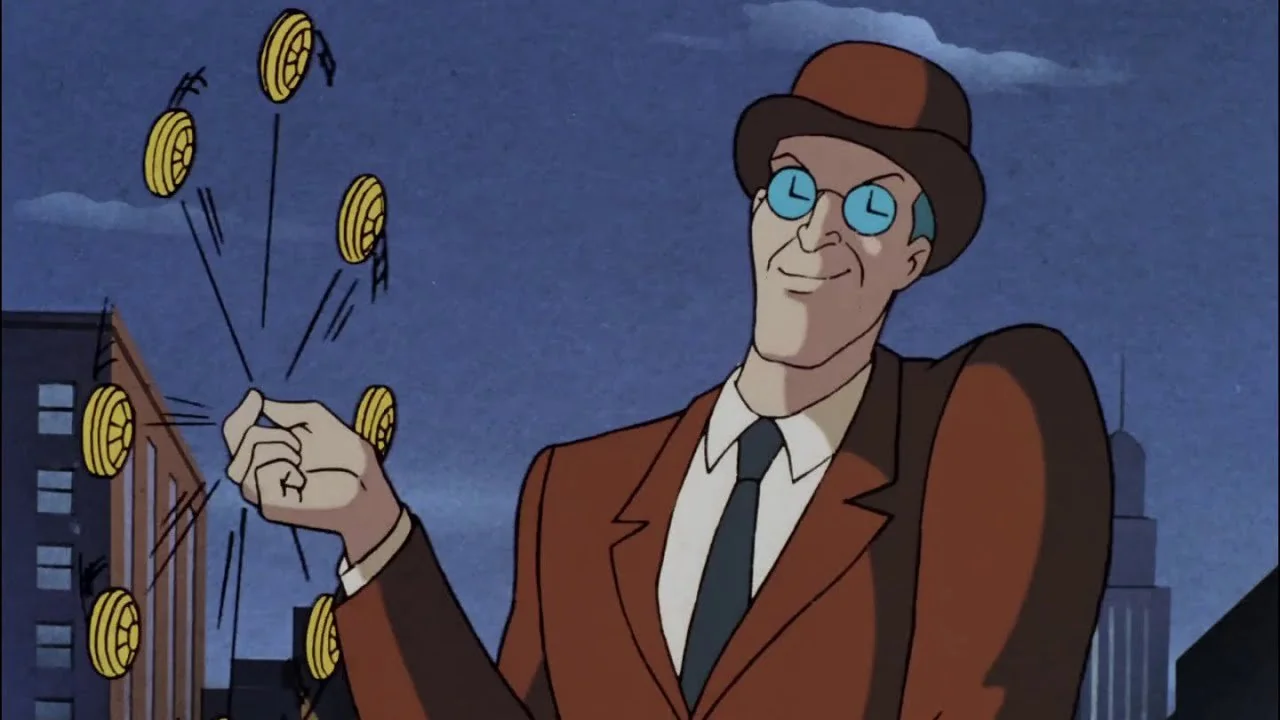
In the episode, ‘The Clock King’, we follow Temple Fugate and his grudge against Gotham’s Mayor Hill. Known for his efficiency, Hill’s suggestion to delay his usual process leads Fugate to be late for an important court date and financially ruin his company. From then on, he makes it his mission to ruin the Mayor’s life.
The character’s obsession with efficiency and time is the highlight; at the end of his arc, his plans collapse, and he does not achieve redemption. The episode shows the hollowness of obsession and does not give a redemptive ending for his arc. Audiences have to sit in the discomfort of seeing a man lose everything.
7. Batman’s Trial Makes Him Face His Own Actions
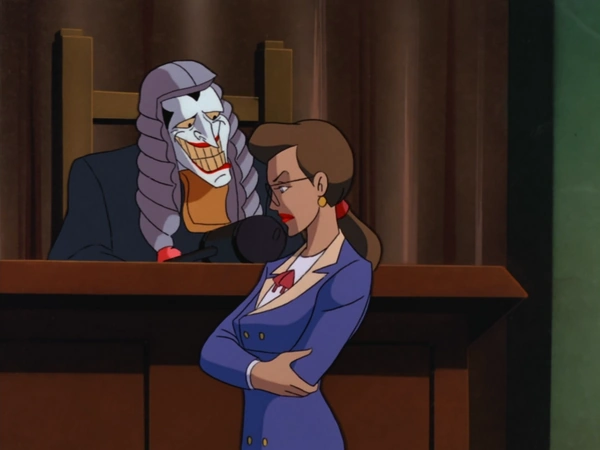
In ‘Trial,’ a mob of Batman’s rogues gallery kidnaps Bruce Wayne and stages a courtroom trial accusing him of creating every villain he’s ever fought, arguing that his war on crime manufactured the very monsters Gotham now fears.
The episode forces Batman to sit through testimony that reframes his crusade as the cause of the city’s suffering rather than its cure, with figures like Two-Face and the Joker presenting twisted yet coherent cases against him.
It’s a rare moment where the show puts its hero on the defensive, asking whether vigilantism solves violence or simply multiplies it, a genuinely uncomfortable question for a children’s series to raise.
8. Batman Confronts His Own Past in Crime Alley
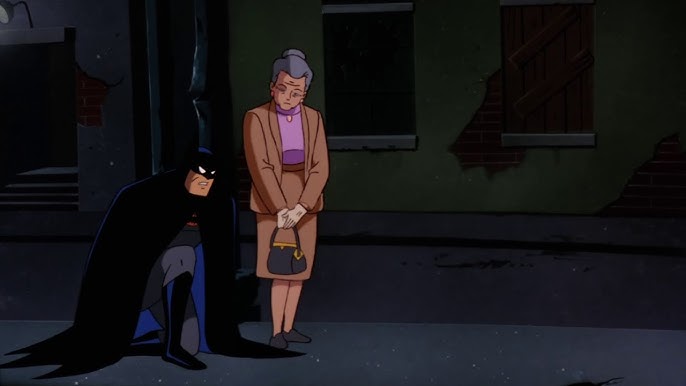
In the episode, ‘Appointment in Crime Alley,’ Batman confronts the aspect of Crime Alley being demolished by the acts of an opportunist. Bruce Wayne’s parents died in Crime Alley, and he visits the place every year on their death anniversary. It shows the psyche of a person who holds on to his trauma and what happens when the trauma decides to leave him.
The episode lingers less on Batman’s fight against the destruction of Crime Alley and more on the loss of his own trauma, which made him the vigilante. He kneels next to the spot where his parents were killed and grieves for the place which won’t hold their spirit anymore. It explores themes of moving on and holding trauma.
9. Baby Doll’s Tragedy Offers a Lesson on Romanticizing the Past
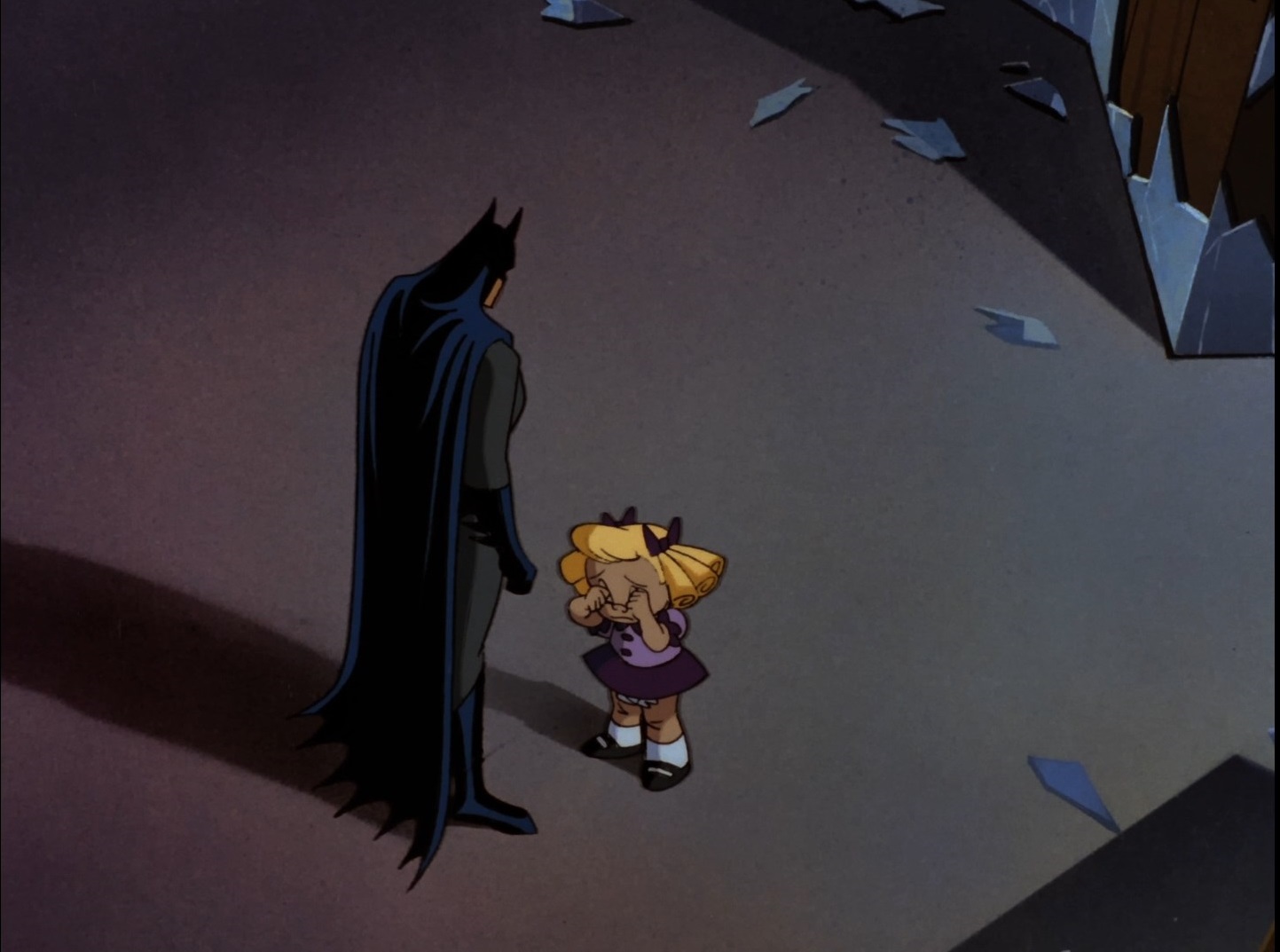
A string of disappearances, a common TV show, and an actress with a rare condition make ‘Baby Doll’ one of the finest episodes of Batman: The Animated Series. The episode sees Batman and Robin investigating multiple disappearances of actors from a 20-year-old TV show. They find out that Baby Doll, an actress from the show, is holding all of them hostage.
It explores the resentment toward the industry that exploited her, curdles into kidnapping and violence against the cast of her old sitcom. The episode quietly examines child stardom, arrested development, and the loneliness of being permanently infantilized by an audience that never let her grow up.
10. Batman’s One Rule Is Pushed to the Brink by Joker
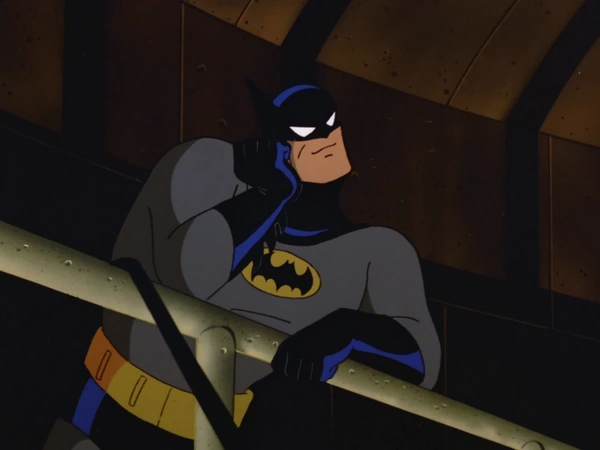
Batman and Joker are positioned as two sides of the same coin. They are equals and opposites and exist solely to complement one another. Batman’s one rule of no killing often makes him the perpetrator of more and more crime, especially because he lets the Joker live. The Joker’s crimes get increasingly deranged, and this rule is tested to its limits.
Batman: TAS never really gives a moral lesson and sticks to it. It offers commentary and makes the moral earn the victory. In ‘The Last Laugh,’ where the Joker releases laughing gas across Gotham, Batman considers killing him and letting him fall from a tall building. That is how much it tests the Caped Crusader.
| Episode Name | IMDb (as of July 5, 2026) |
| P.O.V | 7.5/10 |
| Heart of Ice | 9.0/10 |
| Two Face | 9.1/10 |
| Robin’s Reckoning | 8.7/10 |
| Pretty Poison | 7.9/10 |
| The Clock King | 7.6/10 |
| Trial | 9.1/10 |
| Appointment in Crime Alley | 7.6/10 |
| Baby Doll | 7.8/10 |
| The Last Laugh | 7.7/10 |
Which moment do you think was extremely mature for kid audiences in Batman: The Animated Series?
Batman: The Animated Series is available to stream on HBO Max.