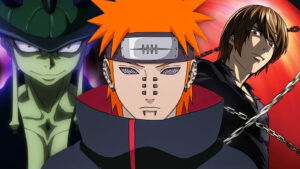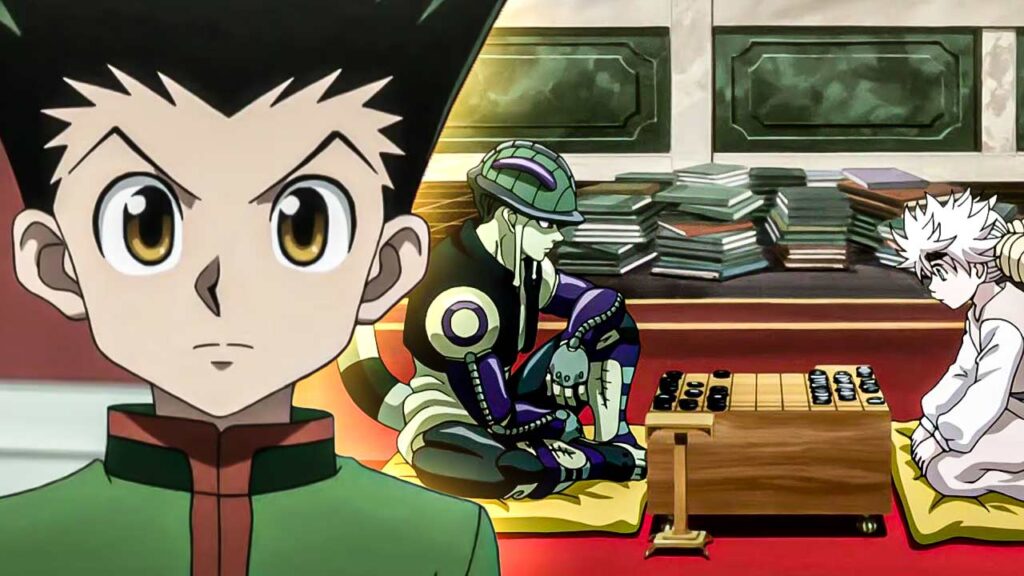
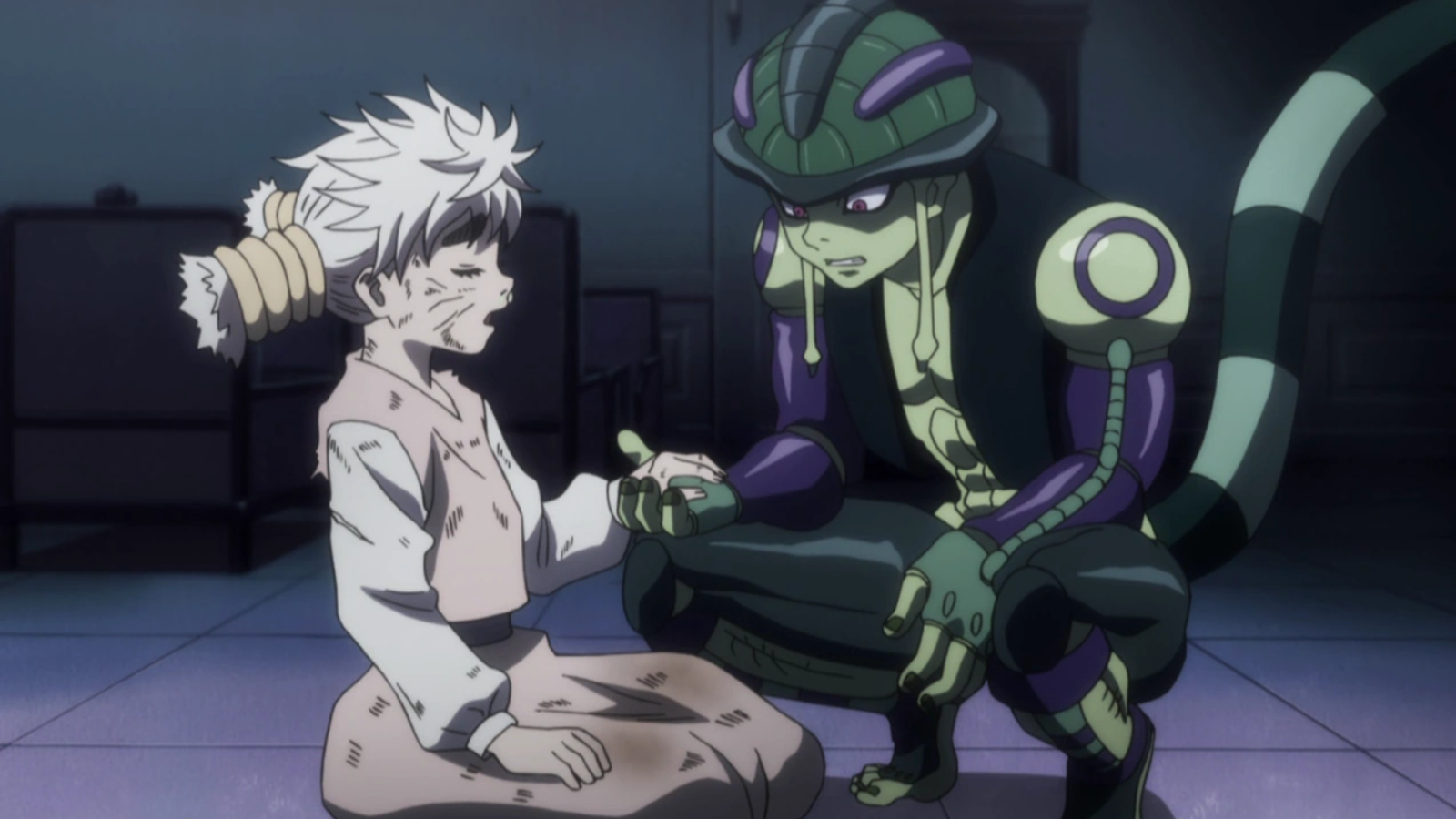
Hunter X Hunter‘s creator, Yoshihiro Togashi, explained how he came up with the idea for his depiction of Meruem’s last moments. The scene, which is heartbreaking and concludes the Chimera Ant arc, shows Komugi, the young Gungi master and the dying king’s friend, consoling a seriously injured Meruem. The unique use of white speech bubbles on blacked-out backgrounds makes this particular chapter distinctive.
The new information about Meruem’s death comes from the Japanese podcast, Iwakura and Yoshizumi’s Show. Yumiko Seki, a former member of Sakurazaka46, a Japanese pop group, revealed on the program that she had emailed Togashi a series of inquiries regarding his comic. She made the decision to share his handwritten replies, which Togashi’s Troupe on X translated into English, along with other Hunter x Hunter fans on the podcast.
Yoshihiro Togashi’s Wish Came True With Komugi And Mereum’s Scene
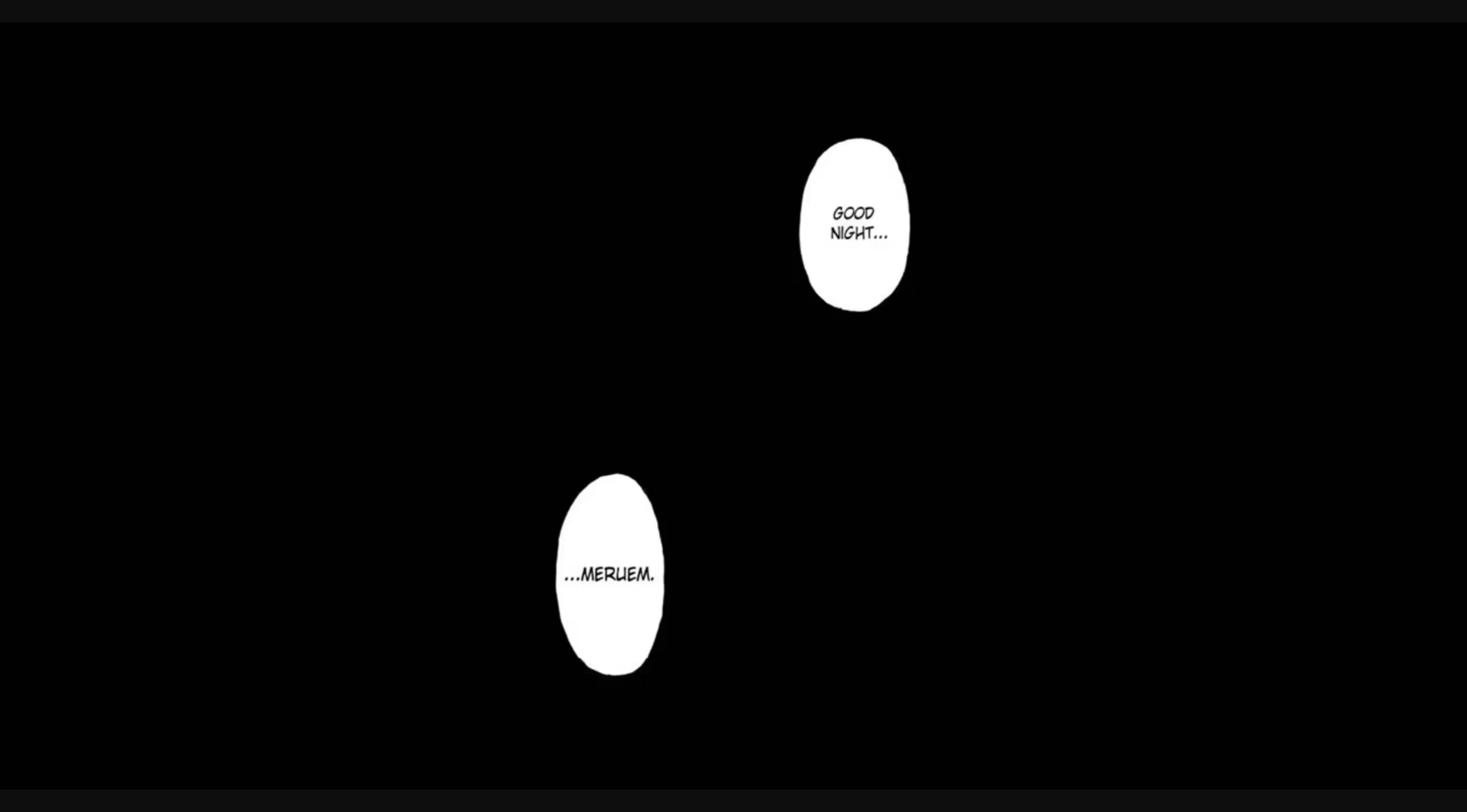
In the interview with Yoshihiro Togashi, the interviewer brought up the cut-to-black scene at Meruem’s final moments, which had a profound impact on all readers. The interviewer then posed the question of whether he planned to write it like that from the beginning.
Togashi responded that almost all the panel layouts were decided right before or during the storyboard process, when the tension was at its peak, and this was when he had the idea of having several pages of speech bubbles on black backgrounds divided vertically.
He further stated:
While drawing the chapter’s storyboards, I thought of a part from Fumiyo Kono’a “Town of Evening Calm, Country of Cherry Blossoms”, remembering the scene as a sequence of monologue-only panels on white backgrounds as divided vertically… It was then that I decided to continue the exchange between Komugi and Meruem in simple, pitch-black panels.
Town of Evening Calm, Country of Cherry Blossoms is a famous manga about a family affected by the atomic bombing of Hiroshima. Despite misinterpreting the context of when this occurred, it inspired the now iconic Hunter x Hunter chapter, which features black panels interspersed with white speech bubbles, with Meruem having a final conversation with Komugi.
Yoshihiro Togashi Gave The Example of Ashita no Joe and Fist of the North Star
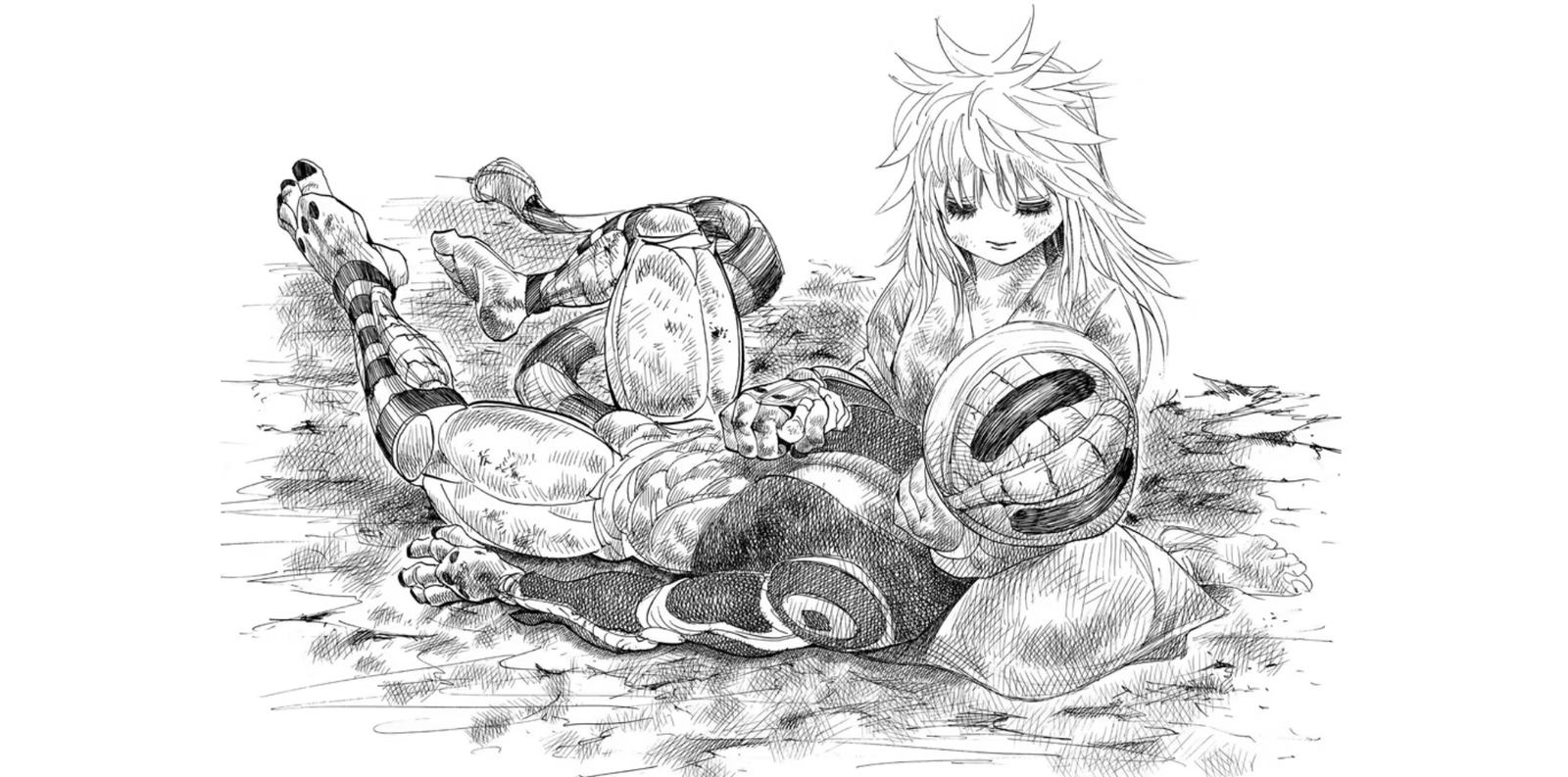
Togashi also gave the example of Ashita no Joe and Raoh from Fist of the North Star, both of which use kakeami (a shading technique that can involve crosshatching) to portray an emotional moment.
He mentions that the kakeami technique is used to emphasize emotional moments in manga, with notable examples including the conclusion of Ashita no Joe, where Joe “burns out” after giving his all in the boxing ring, or Fist of the North Star, when Raoh dies after his final confrontation with Kenshiro.
Togashi revealed that he always wanted to take on that challenge, and his wish came true with the double-page spread of Komugi and Meruem. He also stated that he was satisfied with the fact that he ended his series with the double-page spread that ended up impressing the fans.
Frequently asked questions
How did Yoshihiro Togashi come up with Meruem’s final scene in the Chimera Ant arc?
In handwritten answers Togashi gave to fan questions (emailed by ex-Sakurazaka46 idol Yumiko Seki and shared, translated, on a Japanese podcast), he said almost all the panel layouts were decided right before or during storyboarding, when the tension peaked. That was when he had the idea to present Meruem and Komugi’s final exchange across several pages of vertically divided, pitch-black panels with white speech bubbles.
What manga inspired the black-panel layout of Meruem’s death scene?
Togashi said that while storyboarding he recalled Fumiyo Kono’s ‘Town of Evening Calm, Country of Cherry Blossoms,’ remembering its vertically divided monologue panels (which he recollected as being on white backgrounds), and that this led him to render the Komugi and Meruem exchange in simple, pitch-black panels.
Why did Togashi mention Ashita no Joe and Fist of the North Star?
He cited them as separate examples of the kakeami shading technique (which can involve crosshatching) used to heighten emotional moments in manga, pointing to the ending of Ashita no Joe, where Joe ‘burns out,’ and Raoh’s death after his final fight with Kenshiro in Fist of the North Star.